
Dometic FanTastic Campervan Roof Fan Review and Installation Guide

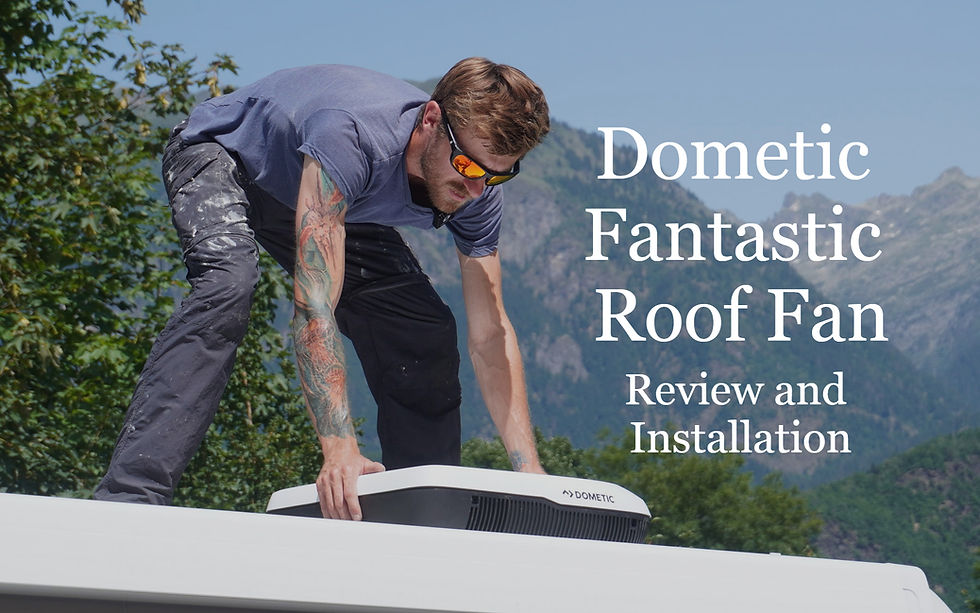
Every campervan should have an unpowered roof vent in order to meet safety regulations and promote a minimum of ventilation. In our view, a powered campervan roof fan is also a must in most cases. Pairing a powered fan with an unpowered vent guarantees effective ventilation even when there's no wind outside, evacuating moisture from cooking, washing, and breathing that could otherwise cause mold. We just installed a Dometic Fantastic Breathe 3100 campervan roof fan in Shane's new van. We chose the Dometic Fantastic Breathe 3100 because we loved Dometic's windows and their Heki Mini skylight. In this review, we'll look at the new campervan fan in detail and show you how we installed it, step-by-step.

Shane is an NCC-certified electrical installer. He has built, taught, and lived in campervans since 2019.
This post contains affiliate links. We may earn a commission at no extra cost to you. To understand our policies on content, affiliate commissions, and liability, please review our Terms of Use.
In This Guide
Supplies List

A power drill of at least 500W
For driving and drilling

For cutting the hole in the van, and for cutting the wood for your frame

For drilling holes in your van's metal roof

For cutting the round corners of the fan hole

For screwing everything together

Necessary for cutting metal

Sikaflex 522 is our preferred flexible, weather-resistant silicone sealant

For applying sealant

For filing away burrs on cut metal edges

Anti-rust zinc mental spray paint
For protecting bare metal from future rusting

Lubricates metal and dissipates heat whilst using the hole saw

For protecting your van's paintwork during metal cutting

For measuring wood and metal

For screwing the roof fan frame together

For securely bonding the roof fan frame

200cm of wood batten of the right dimensions for your roof thickness
For building the frame
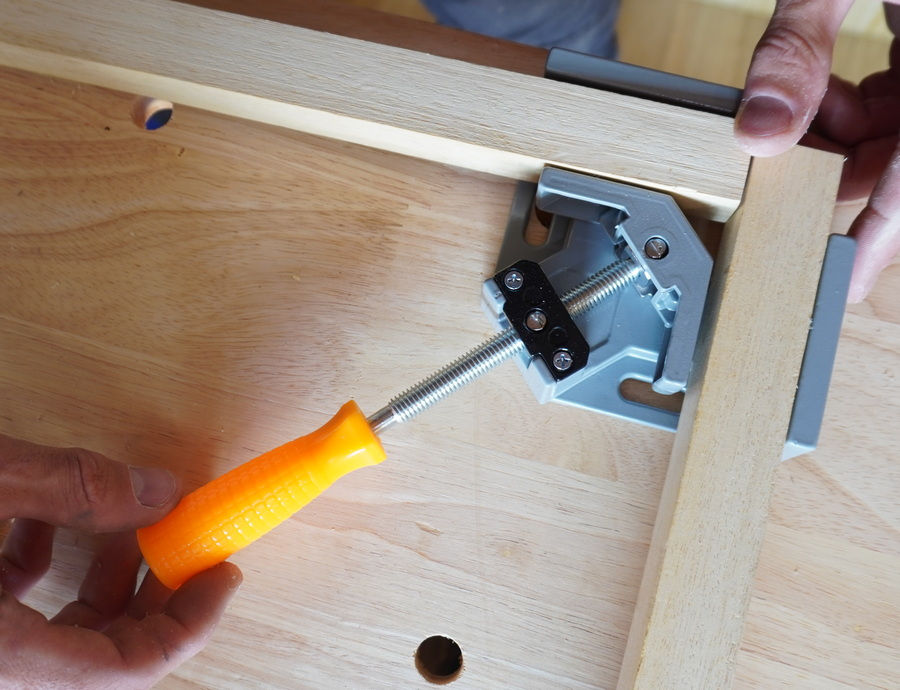
For holding wood in place at a 90 degree angle

Sawing metal is very loud; protect your ears

Combined wire cutting, stripping, and crimping tool
For preparing the fan's power supply cables

For preparing the fan's power supply cables

For preparing the fan's power supply cables

For shrinking heat shrink tubing around connected wires
What's in the Box?
The Dometic Fantastic Breathe campervan roof fan comes in four parts; the roof top unit, mounted to the roof of the van, the heat exchanger unit, mounted inside the van, the interior cover, containing the circuit board and LCD screen, and the ADB centre cover, which is the final interior trim and contains air filters. All wiring comes pre-connected to the roof top unit, and clip-together Anderson connectors are pre-wired, making this campervan fan very plug-and-play. Included in the box is a braided 12V power supply cable for wiring to your van's electrical system, the neccessary mounting hardware (screws etc.), and an instruction booklet.

As we discussed in our review of the otherwise excellent Dometic S4 window and the Dometic Mini Heki skylight, the instructions included in the box aren't always clear. We had to employ some guesswork during the installation, and we're still not 100% convinced that our steps are what Dometic had in mind.
Key Specs
Dimensions: 553 x 537 x 220 mm
Weight: 7kg
Power consumption: 16.5W at 12V, or 1.3A
Touchscreen, remote, and Bluetooth control
Recuperates and redistributes 72-87% of internal heat when it's cold outside; doesn't suck warm air out of the van in winter
Integrated lighting
Integrated air purifyer
The Dometic FanTastic Family of Campervan Roof Fans
The FanTastic Breathe is part of Dometic's broader family of campervan roof fans. The Dometic FanTastic fan range comprises a set of fans called the Vent series, plus the Breathe 3100. Whilst they would all seem to exist within the same family, the Vent and Breathe fans are actually quite different.
The Dometic FanTastic Vent series, comprising the 1250, 1450, 2250, 3350, and 7350, are more traditional high-flow campervan extractor fan models. They take the form of a classic hinged skylight with a big, circular fan installed in the main body. They're very effective at evacuating air, and are specifically intended to cool your van in summer by pulling out hot, stagnant air and promoting ventilation. They won't work when it's raining, but the 3350 and 7350 incorporate automatic rain sensors which close the vent when they detect drips. Dometic don't list airflow figures for the Dometic FanTastic Vent series, but the size of the fans and the open design mean it'll be quite high, reflecting the appliance's focus on moving air and creating a breeze.

The FanTastic Breathe is a very different thing. Its entirely closed design means it works like normal in the rain, and its lower flow, extremely quiet running, heat recovery, and integrated air filter fulfil its purpose as a continuous-flow air quality system. The idea is that the Breathe is a campervan fan that runs much more consistently and at a lower level, giving you constant, gentle airflow whilst maintaining air quality.
The Breathe is much more fully-featured than the Vent series. App control allows you to closely control how it behaves, meaning you can tell it to focus more on air quality than temperature maintenance, for example. Its air quality sensors monitor particulate levels, moisture, and carbon dioxide levels, turning ventilation up or down to keep the air in your van from getting too moist, stagnant, or polluted. The heat recovery system works to recover warmth from the air depending on the internal temperature you set. This means that when the fan runs in winter, 72-87% of the warmth in the air it evacuates is kept in the van: air stays fresh and dry without getting cold.

Finally, the Breathe campervan roof fan is compatible with a wide range of add-ons for enhancing performance:
The air purifyer module gets rid of dust, mold, bacteria, and odors
The solar kit adds a solar panel and integrated battery, allowing the fan to supply its own power
The performance kit senses pressure, eliminating under- or -over pressure even at high altitude
All in all, the Breathe is a much more sophisticated ventilation and air quality system than a conventional fan. It's quieter and works in the rain, allowing for continuous ventilation which it maintains automatically via its smart sensors.
Dometic FanTastic Breathe 3100 Review
Out of the box, Dometic's trademark build quality is immediately evident: the roof top unit is sleek, clean, and sturdy. It's easy to fit the three main components together, which they do snugly with no rattling. The LCD screen is small and neat, and the PCB is pre-wired with all neccessary connections, inspiring confidence in an easy wiring job. Like with the Mini Heki skylight, the only thing that doesn't feel especially solid is the trim frame which covers the fan and electronics. It's made of thin, flexible plastic, and the mesh air filters feel flimsy. We're aware that this piece isn't structural, however, and in the end, it's better that it's lightweight.
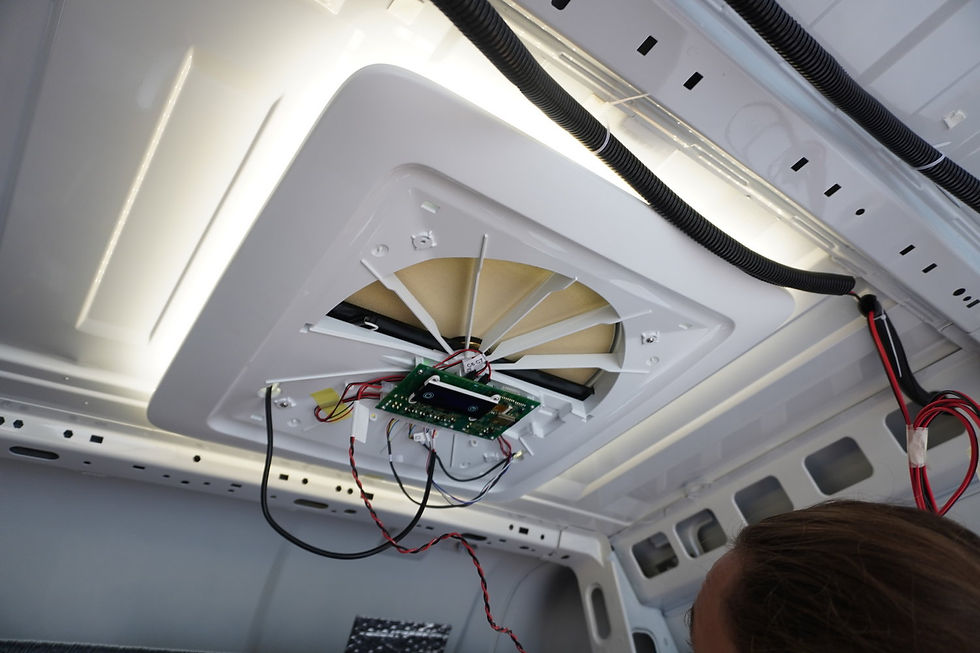
Once the Breathe campervan fan system is installed, it works so well that there's surprisingly little to say. When powered, it turns on and off with a touch of the screen or the remote. The little LCD screen is bright, clear, and very responsive to touch, making it easy to turn the fan on, off, up, and down. The little included remote makes this easier again. The app works well, but for us it seemed like a way of fiddling with your device that didn't seem necessary. The Dometic Breathe works perfectly well on its default settings with the essential functions controlled via the remote. Once on, the fan will run, stop, and turn up or down automatically thanks to its internal thermostat and sensors. It's fully autonomous, and we generally forget it's even there.
Whilst we can't speak to its ability to purify air, we can say that it induced a constant light breeze at its higher settings. At the lower settings, the movement of air wasn't discernable but it kept our windows clear of fog on a damp, rainy day of working inside the van with the windows and doors closed. We were most impressed by the fan's quietness; even at high settings, the Breathe emits a soft, low-level whir that fades quickly into the background. At the low and medium settings, we couldn't hear it running unless everything else was quiet and we were standing right under it. This is almost the most impressive aspect of the Dometic FanTastic Breathe campervan roof fan; along with its entirely autonomous running, the almost nonexistent noise means you simply forget it's there.

What We Didn't Like
The main complaint we had with the FanTastic Breathe arose during the installation, and it was to do with the instructions.
The instructions discuss 'reinforcing rails' and tell you to remove foam from your roof, but aren't clear on what either of these things refer to. Reinforcing rails aren't included with the skylight and aren't even sold separately by Dometic. We eventually assumed that installing the FanTastic Breathe in a motorhome roof requires you to remove foam insulation from the roof cavity and replace it with wooden rails, but we're still not sure.
There's no mention of how to install the fan directly into sheet metal, either. We worked out an installation involving a wooden frame ourselves, but this omission from Dometic is odd, considering the number of panel van converters who will be installing these skylights. We didn't find the installation hard, but it would have been much easier if the documentation were clearer and provided more context for the instruction steps.
We were also disappointed with the build quality of the final trim piece. It's supposed to slot into the interior component of the fan and click into place with four plastic tabs. In our experience, these four tabs do not engage properly, and the trim piece is very loose once in place. With the slightest shake of the van, the trim piece fell out (even closing the side door did it once or twice). We've elected to glue the piece in place at the end of the build, but we're quite unimpressed. If we ever need to access the PCB (for example, to install one of the upgrade modules), we'll have to force the trim plate out and glue it back in afterwards. We consider this a real oversight in an otherwise excellent and well-designed campervan roof fan.

Still figuring out your van build?
This is where most people get stuck — jumping between blog posts, YouTube videos, and forums, never quite sure what to do next.
The Van Conversion Mastery Course gives you a clear, step-by-step system to design and build your van from start to finish — without the guesswork.

How to Install the Dometic FanTastic Breathe Campervan Roof Fan: Step-by-Step Guide
We installed the Dometic FanTastic Breathe directly in the van's sheet metal roof. As this will be the case for most people converting panel vans, our instructions will follow that installation process.
Step 1: Prepare the power cable for your fan
Your Breathe campervan roof fan comes with a combined positive and negative 12V power cable with an Anderson connector on one end, ready to plug into the fan's circuit board in step 7. This power cable needs to be wired into your van's electrical system. You'll need to run a negative and positive 12V wire from your 12V fuse box to a spot near your fan's installation location, and then connect the fan's combined cable to this 12V wire.

The wire you use can be sized to the same gauge as the combined cable supplied by Dometic. Make sure you follow the guidelines and best practice techniques for wire routing and mechanical support outlined in our ultimate guide on wiring.
The actual wiring for your Dometic campervan roof fan is very simple: you simply need to run a positive and a negative cable from terminals on your 12V fuse box out to the fan. Take a look at this wiring diagram, mocked up on Wireframe:

There are many ways to splice the wires coming from your fuse box to the fan's power supply wire. You could use a crimp connection, ideally with in-line butt connectors. Alternatively, you could use a pair of in-line WAGO connectors for maximum simplicity.

Step 2: Build a wooden frame to support your fan
The FanTastic Breathe is designed for roofs 23mm-60mm thick. We bought 2m of 25mm square wooden batten for our frame. The internal dimensions of this frame need to exactly match the dimensions of the hole we cut in our roof. This hole is 400mm x 400mm (per Dometic's instructions).
You'll also need to make sure that the frame is the same thickness as the thickness of your planned ceiling stack. This includes your insulation and cladding layers. During our latest van build, we made the frame too shallow, meaning that our insulation and cladding overtops it, leaving ugly gaps around the perimeter of the skylight.
Measure and cut the wood for your frame
If you're using simple butt joints to build your frame, you'll need:
two lengths of wood the same length as the sides of your roof hole
two lengths of wood the length as the sides of your roof hole + 2x the thickness of the wood
This is because the longer pieces of wood need to fully overlap the ends of the shorter pieces:

If you're using mitre joints, you'll need:
four lengths of wood the same length as the side of your roof hole
Cutting the ends off these lengths of wood at a 45° angle will give you a frame that fits over the hole.
Calculate the lengths of wood you'll need to cut and measure and mark them out. Make sure you're precise in your measurements: measure twice, cut once.

We used a mitre saw to cut our wood to size as it's easy to be very accurate. A jigsaw works too, but make sure you've clamped the wood securely to your workbench. Once the wood is cut, verify that all your pieces are the right length, and sand any splinters off the ends.

Clamp and glue your frame together
Use corner clamps to set the wood up in the form of your frame. Don't tighten these all the way down yet; keep some wiggle room between the lengths of wood whilst holding the structure in place.

Squeeze wood glue onto the butt ends of the shorter lengths of wood, seat them flush against the longer lengths, and clamp them into place. Don't bear all the way down on the clamps one at a time, as the tension on one joint can pull the others out of position. Instead, get each clamp mostly tight, ensure everything's aligned, then go back around and tighten the clamps all the way.

Because the outside of this frame is going to be hidden in the walls on Shane's van, we decided to secure these joints with screws. If you decide to do this, drill pilot holes first to prevent splitting of the wood before driving the screw home. An impact driver counter sinks the screws without needing to use a counter sink drill bit first.

With the wood glue in place and the screws in, leave the frame clamped together for your glue's specified setting time.
Step 3: Cut the hole in your van's roof
Once the glue's set, unclamp the frame and take it out to your van along with:
painter's tape
tape measure
non-permanent marker or pencil
drill with 25mm hole saw attached
tapping and cutting fluid
metal paint
jigsaw with metal cutting blade attached
metal file
Mark the outline of your hole and your hole saw locations
Set the wooden frame on the roof where you want the fan to be. Check that the exterior frame of the fan won't be obstructed by anything structural when it's installed around the hole, and make sure you won't be cutting into anything structural on the inside of the van.

When you're happy with the location of your hole, lay down some painter's tape where you're planning to cut. Use a set square to draw the outline of your hole onto the tape. Once the outline is drawn, verify that the dimensions are accurate. This took us a couple of tries to get right: take your time.
Dometic's instructions specify that your hole saw locations should be 12mm in from the corners of your wooden frame. We used a set square to measure 12mm inwards from each side of our outline and draw a straight line. The points at the corners where these lines intersect are the locations for your hole saw cuts.

Cut out the corner holes using your hole saw
Get your ear protection on and, using an HSS drill bit for pilot holes and a 24mm bi-metal hole saw for the main hole, cut holes at the marked points. Use tapping and cutting fluid to lubricate the hole saw, and use a pulsing action to minimise heating.

You'll be connecting these four holes with straight jigsaw cuts, and the end result will be a rectangular hole with rounded corners.
Connect the corner holes with jigsaw cuts
When cutting with a jigsaw, use a low setting and move slowly and steadily. High saw speeds cause heating, warping, and breakage of the blade. Pushing too much with the saw causes it to snag and jump, making for a jagged cut and broken blades.

File and treat the edges of the hole
Peel off the painter's tape, and wipe away loose swarf and metal dust with a rag. Use a metal file to file down the perimeter of the hole until it's smooth and free of burrs. Take a moment to sweep or hoover up any metal shavings on the inside of the van. All cut metal needs to be treated to prevent rust. We used anti-rust zinc spray because it dries quickly and is very easy to to use. Apply it all around the cut metal edge, ensuring full coverage.

Let the paint dry before moving on to the next step.
Step 4: Stick the roof top unit to your roof
Per Dometic's instructions, run a thick bead of campervan sealant along the groove that runs outside the foam seal on the fan's roof top unit. Be liberal in your application of sealant, ensuring the bead is consistent all the way around, with no gaps.

With your sealant in place, fit the roof top unit into the hole you cut (make sure it's facing the right direction). The foam square should fit snugly into the hole. Press the unit down firmly on all sides and corners, squeezing it into the roof. You should see sealant oozing out a little bit all around the perimeter.
Step 5: Fix the heat exchanger unit to the roof top unit
On the inside of the van, put the wooden frame in place around the roof top unit's black foam flange, which should now be projecting into the van. Test fit the heat exchanger unit around the flange, over the wooden frame. Make sure everything fits correctly and that the heat exchanger unit's screw holes line up with those of the roof top unit.
Dometic supply spacers with the FanTastic Breathe fan. These are twelve white plastic tubes, 38mm long, which fit into the screw hole sockets on the top side of the heat exchanger unit. They're designed to be cut to length to match the thickness of your van roof.
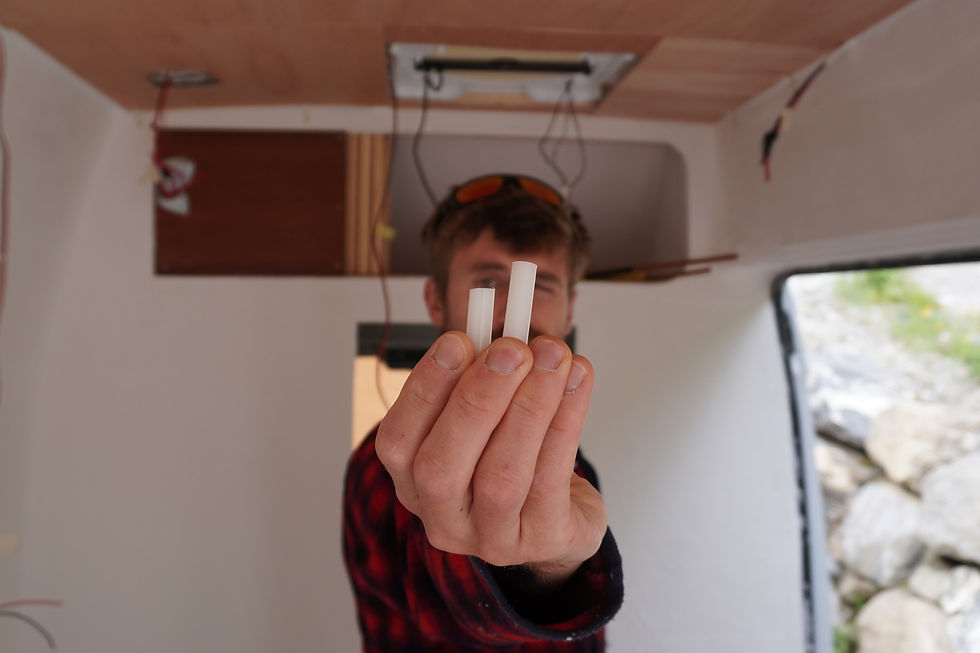
If you're fitting your Dometic FanTastic fan directly into the van's sheet metal roof, you'll have had to have built a frame to increase the thickness of the roof up to the minimum 23mm that the fan is designed for. If your roof with the frame is exactly 23mm thick, you won't need to use the spacers at all; the heat exchanger unit's screw sockets should fit snugly into those of the roof top unit. If your combined roof thickness is anything over 23mm (especially once you've installed your ceiling material), you'll need to cut the spacers to length with a hacksaw. Dometic provide a table for these measurements on page 13 of the installation module:

Put your spacers in the sockets in the top side of the heat exchanger unit. Next, feed the loose cables connected to the roof top unit through the key hole bushing of the heat exchanger unit. Line up the heat exchanger's screw holes (and spacers, if using) with those of the roof top unit, and fasten the two units together using the twelve included screws.
Step 6: Fix the interior cover to the heat exchanger unit
Take the dangling cables that should now be protruding through the key hole bushing in the heat exchanger unit, and feed them through the keyhole bushing of the interior cover. Then, fit the interior cover to the heat exchanger unit so that the four screw holes align. Fasten the interior cover to the heat exchanger unit using the four shorter screws included with the fan.

Step 7: Connect the cables to the interior cover's circuit board
All of the cables now protruding from the interior cover are clearly labelled: the label corresponds to the number labels on the circuit board. Anderson connectors easily click into place in their appropriate sockets; don't force them. Connect each cable to its appropriate socket. Once everything is connected, use the included cable ties to tidy everything up.

Step 8: Fix the ADB centre cover to the interior cover
The final step is to simply clip the trim cover to the interior cover. The trim cover has four tabs around its perimeter which should clip into slots in the interior cover. This gave us trouble; the tabs didn't engage properly, and the trim cover was very loose once attached. We had to daub adhesive onto the tabs and permanently fix the trim cover in place.

With the trim cover in place, your installation is complete. Power up the fan and give it a test.
Final Thoughts
Overall, we're impressed with the Dometic FanTastic Breathe 3100. The installation was mostly easy, and once installed it works very well. We like its fully autonomous and incredibly quiet running. The remote is convenient, as is the app control, and like all good appliances, we more or less forget it's there during the day-to-day in the van. Unclear instructions and a slip in build quality for trim elements is a recurring pattern in Dometic products which we were disappointed to see recur here. Overall, though, it really is a good piece of kit, and is a great campervan roof fan for people who want quiet and a focus on air quality.
We'd strongly recommend pairing any powered roof fan with an unpowered skylight; take a look at our review of Dometic's Mini Heki to find out more. Your next job might be the installation of a window: we've got a guide on that too, as well as an in-depth review of Dometic's excellent S4 windows.
Planning your van conversion?
Start with the free Van Conversion Diagram Pack below.
Want a clear step-by-step path for your full build?
The Van Conversion Mastery Course walks you step-by-step through the entire build process — from planning and layout to electrics, insulation, water, gas, carpentry, and more.
Until next time.

